
Are Robotic Pets Good for Kids? Benefits, Safety & Buying Guide
Interactive robotic pets can give children opportunities for nurturing play, gentle handling, sensory engagement, and companionship when a living animal is not practical. However, research has not established that robotic pets provide all the same developmental benefits as real animals.
July 2026 · 7 min read · Interactive Companion Digest

By the Interactive Pet Marketplace Editorial Team
Key takeaways
- Positive interaction with living animals has been associated with emotional development, responsibility, companionship, and conversations about feelings.
- The research on children and pets is promising but mixed; pet ownership alone does not guarantee better developmental outcomes.
- Robotic pets can reproduce certain parts of pet interaction, including responding to touch, movement, and sound, but they should not be presented as a proven substitute for a living animal.
- For younger children, simple touch-responsive companions are generally more appropriate than app-dependent or highly technical robots.
- Parents should consider safety, durability, privacy, volume, age recommendations, and ongoing costs — not just how realistic the pet looks.
How can pets support a child’s emotional development?
Animals give children opportunities to practice responding to another living being’s needs.
A child may learn that a dog welcomes a gentle approach but backs away from loud or rough behavior. A cat may seek attention at one moment and want space the next. These interactions can create natural opportunities for adults to discuss feelings, boundaries, body language, and care.
A 2023 study compared parent-child play involving a household dog with play involving a lifelike toy. Parents used a greater proportion of emotion and mental-state language while interacting with the real dog. The researchers concluded that household pets may provide a useful setting for conversations about thoughts and feelings.
Children’s Hospital Colorado similarly notes that caring for a family pet can support responsibility, companionship, emotional development, and a child’s understanding of loss and grief.
Pet caregiving may also support social connection. A 2024 study of 471 Taiwanese children ages 11 to 12 found associations among pet caregiving, interpersonal relationships, well-being, and connection with nature. However, the findings varied among groups and should not be interpreted as proof that pet ownership automatically causes greater empathy or social development.
The research is encouraging — but not conclusive
It is easy to overstate the evidence.
A 2025 longitudinal study examined pet ownership at ages one and four to five and children’s mental-health outcomes at ages seven to eight. It did not find a consistent overall association between owning a pet and fewer emotional or behavioral problems. The results suggested that the type of animal and timing of exposure may matter, but pet ownership by itself was not a guarantee of better outcomes.
The most accurate conclusion is:
Regular, positive interaction with animals may create valuable opportunities for emotional learning, companionship, and caregiving — but the outcome depends on the child, the animal, the family environment, and the quality of the interaction.
Can robotic pets provide the same benefits as live animals?
Not necessarily.
Most research about empathy, responsibility, and emotional development involves children interacting with living animals. Those findings should not automatically be applied to consumer robotic pets.
A robotic companion cannot fully reproduce:
- The independent needs and behavior of a living animal.
- The complexity of real animal body language.
- The responsibility of feeding, walking, grooming, and veterinary care.
- The bond that may develop with a living creature over many years.
However, interactive pets can reproduce parts of the experience.
Depending on the product, a robotic pet may:
- Respond when stroked or held.
- Make comforting sounds.
- React to movement or voice.
- Encourage gentle handling.
- Seek attention or initiate play.
- Provide a predictable sensory experience.
- Give a child something to nurture and include in imaginative play.
These features may help parents create conversations about kindness, boundaries, emotions, and caregiving. The evidence does not yet show that robotic pets teach empathy to the same degree as living animals, so they are best viewed as tools for nurturing play and engagement, not replacements proven to deliver identical developmental outcomes.
When might an interactive pet be a good choice?
A robotic or plush interactive pet may be worth considering when a family wants a pet-like experience but cannot responsibly care for a living animal.
Common reasons include:
- Animal allergies.
- Rental or apartment restrictions.
- Limited space.
- Frequent travel.
- Cost concerns.
- A child who is not ready for animal-care responsibilities.
- A household member who is afraid of animals.
- Concern about scratching, biting, or unpredictable behavior.
- A preference for a lower-maintenance companion.
- A child who benefits from calm, predictable sensory interaction.
Interactive pets do not require feeding, house-training, veterinary care, or daily walks. They also avoid animal illness and end-of-life decisions, although children can still become emotionally attached and may feel upset if a favorite companion breaks or is lost.
A robotic pet should therefore be introduced honestly: “This is an interactive companion we can care for and play with. It is not alive, but it can respond to us in different ways.”
What should parents look for in an interactive pet?
1. Touch responsiveness
For nurturing play, the pet should respond clearly to gentle contact.
Look for reactions to:
- Petting.
- Holding.
- Hugging.
- Touching different areas.
- Grooming or brushing.
- Sustained versus brief contact.
A responsive pet gives adults opportunities to reinforce gentle handling. Avoid claiming that this feature alone “teaches empathy”; it is more accurate to say it can support empathy-related conversations and play.
2. Age-appropriate safety
Check the manufacturer’s recommended age rather than relying only on the product’s appearance.
Review:
- Small detachable pieces.
- Exposed gears or pinch points.
- Battery-compartment security.
- Charging-cable safety.
- Sharp edges.
- Product weight.
- Tip-over risk.
- Materials and cleaning instructions.
Adults should supervise younger children according to the manufacturer’s directions.
3. Durability
Young children may hug, carry, squeeze, or accidentally drop a companion pet.
Consider:
- Whether the body is soft or rigid.
- How well moving joints are protected.
- Whether fur can be cleaned.
- Whether replacement parts are available.
- Warranty coverage.
- Whether the product remains usable if one feature stops working.
4. Appropriate realism
Many younger children respond well to familiar animal forms such as dogs and cats. A highly mechanical or abstract robot may appeal more to a child interested in technology.
The best design depends on the child:
- Soft and realistic: Better for cuddling, comfort, and pretend caregiving.
- Clearly robotic: Better for coding, technology, movement, and interactive play.
- Highly lifelike: Potentially engaging, but some children may find certain sounds or movements unsettling.
Whenever possible, show the child a video before purchasing.
5. Sound and volume control
Repeated barking, meowing, music, or electronic noises can become overwhelming.
Check whether the pet has:
- Adjustable volume.
- A mute option.
- Predictable sounds.
- A quiet or nighttime mode.
- Mechanical motor noise.
- An easily accessible On-Off switch.
This is especially important for children with sensory sensitivities.
6. App and internet requirements
A simple companion that responds directly to touch and sound may be easier for younger children than one that requires a phone.
Before purchasing an app-connected robot, determine:
- Whether the core features work without an app.
- Which phones or tablets are supported.
- Whether an account is required.
- Whether the manufacturer charges a subscription.
- Whether software updates are necessary.
- What happens if the app or company is discontinued.
7. Camera, microphone, and privacy features
Some advanced robotic pets include cameras, microphones, voice recognition, cloud processing, or remote-control functions.
Parents should review:
- What information is collected.
- Whether audio or video is stored.
- Whether data is transmitted to the cloud.
- Whether recordings can be deleted.
- Whether parental consent is required.
- Whether the camera and microphone can be physically disabled.
- The manufacturer’s children’s privacy policy.
A camera-equipped robot should not be placed in a child’s bedroom without fully understanding its privacy controls.
8. Maintenance and ongoing costs
The purchase price may not be the complete cost.
Consider:
- Disposable or rechargeable batteries.
- Charging frequency.
- Replacement battery availability.
- App subscriptions.
- Accessories.
- Replacement parts.
- Cleaning requirements.
- Warranty and return policy.
Our top interactive companion for younger children
Percy 1.1 is our top-ranked option for children and families because it combines a soft, familiar dog design with uncomplicated interaction.
Its weighted body, touch sensors, heartbeat simulation, and soft exterior are designed for holding and sensory comfort. It does not require an app or complicated setup, making it more approachable for a child who primarily wants a comforting companion rather than a technical project.
Why it ranks first in our children and family category
- Safety risk: Our review found no obvious sharp edges, exposed mechanical parts, or small pieces in normal use. Parents should still follow the manufacturer’s age recommendation and supervision guidance.
- Emotional-comfort potential: Its soft body, familiar appearance, simulated heartbeat, and touch reactions are designed to encourage holding and affectionate interaction.
- Touch responsiveness: It reacts to petting and holding, creating an easy-to-understand interaction loop.
- Durability: Its relatively simple design has fewer exposed moving parts than an autonomous walking robot.
- Ease of use: No app or account is required for its primary functions.
Important limitation: Percy is designed primarily as a comfort and nurturing-play companion. It does not offer the autonomous movement, navigation, advanced voice interaction, or customization found in more expensive robot pets.

Chongker
Percy 1.1 Robotic Companion Dog
★★★★★4.8 (13 reviews)
Top score for touch responsiveness, durability, and safety. No apps or setup required.
$99.00
Price checked 2026-08-05 · Rating checked 2026-08-05
A more advanced choice for older children
Loona offers a different experience from a soft companion pet. It is an autonomous robot with movement, animated expressions, voice interaction, app-connected features, and customizable behavior.
It may be a stronger choice for a child who is interested in:
- Robotics.
- Artificial intelligence.
- Autonomous movement.
- Interactive games.
- Technology-based play.
- Learning how devices respond to commands and environments.
Why some families may prefer Loona
Its movement and animated face can make interactions feel more dynamic. Children may enjoy seeing the robot explore, respond, and initiate activity rather than simply reacting when touched.
Important considerations
Loona is significantly more expensive and requires more setup and maintenance than a simple touch-responsive companion. Parents should examine:
- App requirements.
- Wi-Fi and account setup.
- Camera and microphone controls.
- Data and privacy policies.
- Charging time and battery life.
- Software support.
- Warranty and replacement options.
- Whether the child will enjoy the movement and sounds.
For a younger child primarily seeking something soft to hold, Loona may be more complex than necessary.
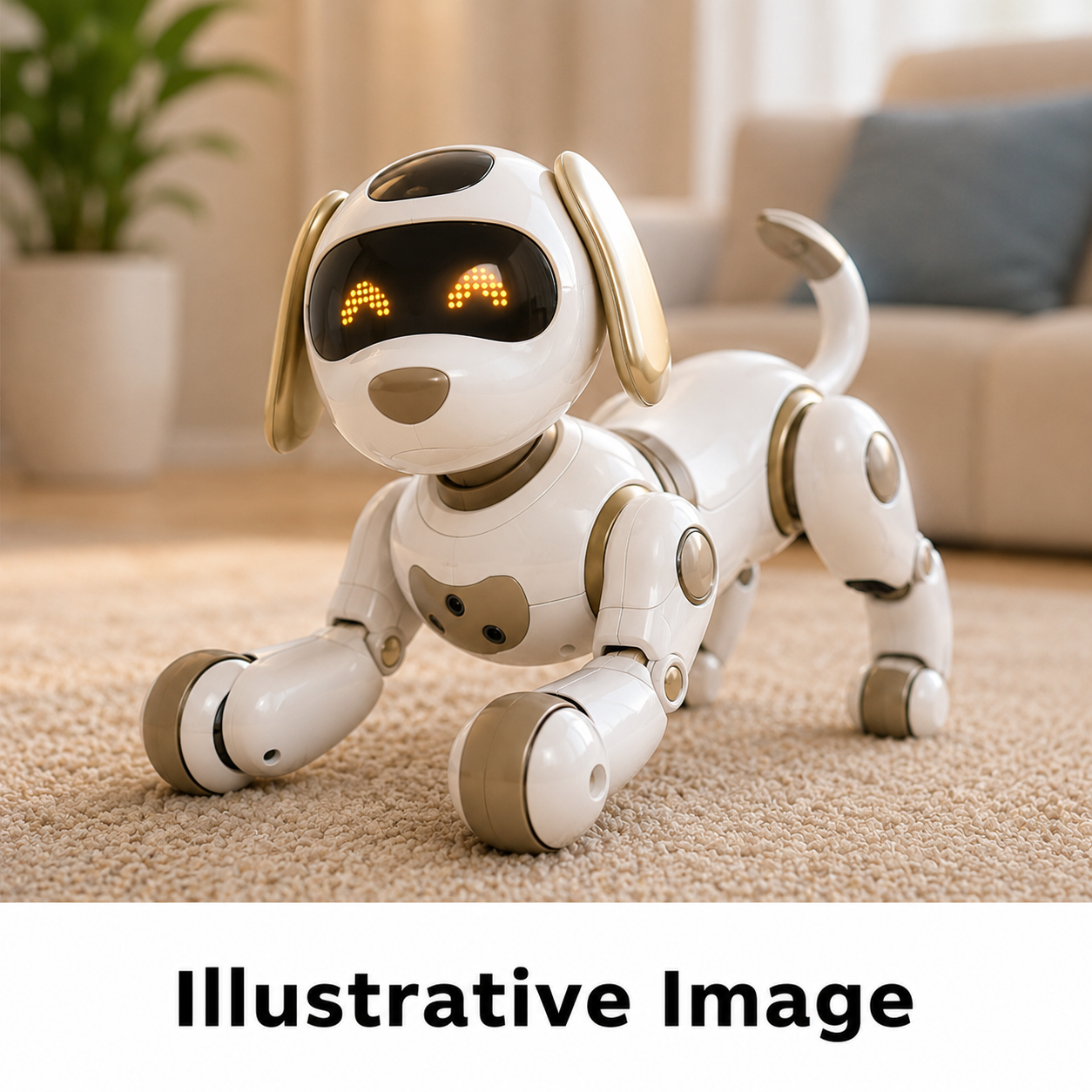
Loona
Robot Pet Dog
★★★★4.1 (1,231 reviews)
For tech-interested older children. Autonomous movement, AI interaction, customizable behavior.
$499.00
Price checked 2026-08-05 · Rating checked 2026-08-05
Affiliate disclosure: Interactive Pet Marketplace may earn a commission from qualifying purchases without increasing the price paid by the customer.
Simple companion pet or advanced robot?
| Feature | Soft interactive companion | Advanced robot pet |
|---|---|---|
| Typical appeal | Comfort and nurturing play | Technology and active play |
| Likely age range | Younger children, subject to manufacturer rating | Often better for children around eight and older |
| Primary interaction | Touch, holding and sound | Movement, voice, app and autonomous behavior |
| App required | Usually not | Often required for some features |
| Internet required | Usually not | May be required |
| Cameras or microphones | Uncommon | More common |
| Noise level | Usually lower | Motors and electronic sounds may be noticeable |
| Maintenance | Batteries or basic charging | Charging, updates, app and connectivity |
| Typical price | Lower | Substantially higher |
| Best fit | A child seeking a comforting companion | A child interested in robotics and interactive technology |
Are interactive pets safe for children?
They can be, provided parents choose an age-appropriate product and follow its instructions.
Before giving a child an interactive pet:
- Confirm the manufacturer's age rating.
- Inspect it for loose parts and exposed mechanisms.
- Secure batteries and charging cables.
- Test the volume and movement.
- Review camera, microphone, app, and privacy settings.
- Explain how to handle the product safely.
- Supervise initial use.
- Stop using it if the product is damaged or overheats.
No ranking or product description replaces the manufacturer’s safety instructions.
Frequently asked questions
Are robotic pets good for children?
Robotic pets can provide companionship, nurturing play, sensory engagement, and opportunities to practice gentle handling. They are particularly useful when a live animal is impractical. Research has not established that they provide all of the same developmental benefits as living pets.
Can an interactive pet teach empathy?
A responsive pet can help parents introduce conversations about kindness, feelings, boundaries, and gentle behavior. However, current evidence does not prove that consumer robotic pets teach empathy to the same degree as interaction with a living animal.
What age is best for a robotic pet?
It depends on the product. Younger children may do better with a simple, durable, touch-responsive companion. Older children may enjoy autonomous robots, apps, voice features, and customization. Always follow the manufacturer's stated age recommendation.
Is a realistic interactive pet better than a robot-looking pet?
Neither is universally better. A soft dog or cat may encourage comfort and pretend caregiving, while a visibly robotic design may appeal more to a child interested in technology. The child's preferences and sensory responses matter most.
Should I choose a robotic pet that uses an app?
An app may add games and customization, but it also introduces setup, compatibility, privacy, and long-term support concerns. For younger children, a pet whose primary functions work without a phone is often simpler.
Are interactive pets appropriate for children with sensory sensitivities?
Some children may find soft fur, gentle pressure, a simulated heartbeat, or predictable responses calming. Others may dislike mechanical sounds, unexpected movement, flashing lights, or certain textures. Review videos and sound demonstrations first, and introduce the product gradually.
Can an interactive pet replace a live animal?
It can replace some practical aspects of pet-like play, but it does not reproduce the complete relationship, behavior, or care responsibilities associated with a living animal.
Our conclusion
Interactive pets can be valuable when they are matched to the child and described honestly. For younger children seeking comfort and simple nurturing play, a soft touch-responsive companion such as Percy 1.1 may be the better fit. For an older child fascinated by technology, movement, and artificial intelligence, an advanced product such as Loona may provide a more engaging experience.
Research supports the potential value of positive interaction with living animals. Robotic pets may reproduce some useful interaction patterns, but they have not been proven to provide identical developmental benefits. Families should therefore choose an interactive pet for what it can genuinely offer: companionship, imaginative play, sensory engagement, and opportunities for parents to reinforce gentle, thoughtful behavior.
See the complete rankings
Sources and further reading
- González L, Guxens M, Sarzo B, et al. Impact of pet ownership in early childhood at ages 1 and 4–5 years on mental health at ages 7–8: findings from the INMA project. World Journal of Pediatrics, 2025.
- Tseng TA, et al. Peer bonds and nature's embrace: exploring the influence of pet caregiving on social well-being and nature connection among Taiwanese children. Frontiers in Public Health, 2024.
- Reider LB, et al. The impact of household pets on children's daily lives: differences in parent-child conversations and implications for children's emotional development. Developmental Psychology, 2023.
- Children's Hospital Colorado. The Benefits of Adding a Pet to the Family.